Showing posts with label Heart Health. Show all posts

Stop counting calories

Source: http://blogs.bu.edu
I know you've heard it a hundred times, but watching what we eat is really important. I know people who count calories, check carbs, monitor sugar grams or fat content. The main element to focus on are the ingredients.

Don't be so worried about how many calories you're intaking a day. Instead, focus on where your calories are coming from. The source of the calories are more important than you know. They affect your energy level, nutrition deficiencies, health and weight.

First, try to avoid the ingredients listed here: Ingredients to Avoid.

Those ingredients typically carry the highest carb load, sugar content, fat content and calories. I stumbled on a great article that showed the distribution of food and how important it is to watch what you eat.


Not a resolution...a way of life

I've been given several excuses for not eating organic or healthy: "it's too expensive"and "it doesn't taste good"are the two most frequent responses.

My reply:

1. "It's too expensive" =  Medical insurance and prescription drugs for heart medication, cholesterol, diabetes, colds, blood pressure (and the list can go on) are much more expensive on a monthly basis, especially considering the number of American's on medical drugs on a daily basis. This is not to mention that a healthy lifestyle and regiment can actually get rid of most of these.

2. "It doesn't taste good" = Well not after you're used to eating a starchy, high sodium and high sugar diet. Sugar can last on your tongue up to 10 days and anything you eat during that time needs to be as sweet or sweeter in order for you to think it tastes good. Try getting away from all sugars for a couple weeks then take a bite out of an apple. It will never have tasted better!

Tap Water = Allergies and Asthma???

Image Source: BU Today

Water, one of the most important elements in life and something we cannot live without. You would think all water is clean...or at least should be. The problem lies in the fact that we have pretty much polluted our lakes, streams, oceans, rivers and every other source of water.

With this contamination comes the need to "clean" it. How do we think everything needs to get cleaned? Through high intensity chemical compounds that kill bacteria and quite a bit more along the way, including good bacteria in our own bodies.

Same ol' New Years Resolution

Happy New Years Readers!!!

When the majority of American's create their New Year's Resolutions, 99% (my own made up stat...lol) have some sort of weight loss goal. In addition, this stat is true: 80% of resolutions are renounced by February.

Here's a way to really try to hit those weight loss goals and KEEP it off! First, make a healthy diet change, for life. Don't go ON A DIET. It never works, because when you lose the weight and "get off the diet" you gain it all back plus some extra lovin'.

Here's a list of 8 ways to make the change for a healthier you:

1. Eat more greens! I don't care if you buy Green Vibrance (which is amazing) and take a scoop of it a day in a shake or if you eat raw greens...just do =)

2. Take time to eat breakfast. I hear the complaint all the time about not having time or not wanting to because all they need is coffee. Uhhh...wrong! The word comes from breaking the fast from your previous meal usually about 15 hours before. You need to get your metabolism jumpstarted or it will lag the rest of the day leaving you without energy and fuel.

3. Get more fiber. Women need 25-30 grams per day and Men need 30-35 grams per day of fiber. Most Americans get about 10 grams. It's no wonder most of Americans are constipated and unable to detoxify properly. Flax seed, rice bran, fruits, vegetables and beans are a great way to boost up your fiber intake. Start reading those labels people! =)

4. Go wild with berries: blueberries, cranberries, strawberries, raspberries, cherries...they provide a powerhouse of antioxidents. I usually buy frozen berries and add a scoop of my green's powder for an awesome smoothie jam packed with nutrition.

5. Cut out hydrogenated trans fats. Read labels and make sure none of it has anything "hydrogenated oil" or "partially hydrogenated oil". This oil is what raises the bad cholesterol, clogs arteries and gives you the lovely fat around your body.

6. Avoid artificial flavors. From vitamins all the way to candy, these sneaky colors make it onto 80% of children's food and about 75% of our grocery store. This is what gives coloring to the food. As if it matters what color it is. There are natural ways to color things (aside from leaving it the color it was intended to be) through beet juice, carrots...etc. Stay away from "Red No. 40, Yellow No. 5...etc)

7. Stay away from White Sugar or High Fructose Corn Syrup. Or any corn syrup for that matter. To really shed those pounds, stay away from refined and highly processed sugars. These raise insulin levels, and can lead to a myriad of diseases starting with obesity.

8. Drink more green tea. It's full of antioxidents and can help with weight loss and cancer prevention. It has so many benefits, it's no wonder its been an ancient tradition in Asia.

Hope this gets you off to a good start! Happy New Year!
"B" Vitamin Breakdown

Garden of Life B Complex
Many people know about taking a "B Complex" but don't really know what B vitamins are good for. Here's a quick rundown of some of the overall benefits of the B vitamins:

  • B1 (Thiamine) - Used for neural function (brain), liver protection, nerve health, vascular health and kidney health in diabetics. 
  • B2 (Riboflavin) - Boosts folic acid's (B9) colorectal cancer protective effect (hence why B complex is necessary...they all work together synergistically), increases iron absorption and regulates red blood cell growth, memory, depression, healthy hair, nails, skin and vision. It also has some antioxidant capacity and is sometimes used as a natural yellow colorant in foods and cosmetics. 
  • B3 (Niacin) - Increases HDL (good) cholesterol and lowers LDL (bad) cholesterol and triglycerides, and is critically important for cardiovascular health. It aids in brain repair after a stroke. Niacinamide is known for treating fungal infections, fetal alcohol syndrome and may have a role in easing discomfort for multiple sclerosis by preventing NAD depletion. 
  • B5 (Pantothenic Acid) - Known to be involved as a coenzyme A precursor, it is also vital for metabolism and energy production in the body. Derivatives panthenol and pantethine are important for skin and hair health as well as helping to optimize a person's lipid profile (sound familiar? Pantene Pro-V tries to mimic this vitamin for their shampoos and conditioner). 
  • B6 (Pyridoxine) - In combination with folic acid and B12, it helps reduce homocysteine in the blood, which as implications for heart and brain health. Can also protect against colorectal and lung cancer, especially for smokers. B6 helps optimize nervous system health and can treat neuropathy and carpal tunnel syndrome. 
  • B7 (Biotin) - This vitamin is necessary for cell growth, the production of fatty acids, and the metabolism of fats and amino acids. not only assists in various metabolic reactions but also helps to transfer carbon dioxide. Biotin may also be helpful in maintaining a steady blood sugar level. This is the most popular vitamin for strengthening hair and nails and helping with skin. (I take this =p)
  • B9 (Folic Acid or Folate) - This is critical in reducing homocysteine in the blood (in combo with B6 and B12), a major risk in heart disease and stroke. It prevents neural tube birth defects in developing infants in utero, which is why it's recommended all women whether pregnant or in their child-bearing years take this important B vitamin. Usually 800mcg is the recommended dosage (also found in prenatals). It has been shown to improve vascular function and blood pressure in young women. 
  • B12 (Cynocobalamin or Methylcobalamin) - Useful in homocysteine reduction through its ability to convert folic acid to it's more active form (methylcobalamin) known to treat anemia in the elderly. It helps metabolize fats and carbs and is especially important in optimizing nerve health. Vegetarians have special needs to supplement B12 because their diets are naturally deficient in this critical nutrient. Most importantly, B12 is known best as the energy vitamin. It helps energize the cells and gives individuals that boost they need during the day. On a side note: methylcobalamin is the form I recommend because it is the active form and more readily available and ready to absorb.

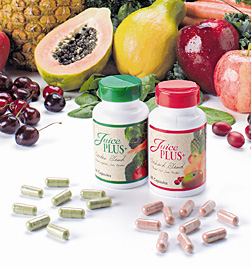
I'm really biased with which vitamins I use because I only want the best. The two companies that truly do organic fruits, vegetables and herbs in all of their formulas are Garden of Life and New Chapter (the two images shown above). Each vitamin comes from the mentioned sources. They do not isolate the vitamins and they are definitely not synthetic (which is what you find in most vitamins). The other company worth mentioning cannot be found in stores, it is JuicePlus+ (shown below). They have all fruits and vegetables in their products.

CoQ10 or Ubiquinol?

If you know what CoQ10 and/or Ubiquinol are, you've probably asked this question. If you have no idea, you'll learn a little something today. 

What is CoQ10 (Coenzyme Q10 or Ubiquinone)? This is a naturally occurring compound found in every cell in the body. It plays a key role in producing energy in the mitochondria, the part of a cell responsible for the production of energy in the form of ATP. 

Where is it found or made? Some CoQ10 is made in the liver and it is found in most food sources including meat, fish, whole grains, nuts and green vegetables. But, from the age of 20, cell levels of CoQ10 naturally start to decline so that cells do not receive all the energy they need.

Jarrow QH-absorb Ubiquinol (made with KanekaQ10™)
Why do people take supplemental CoQ10 or Ubiquinol? Because CoQ10 is made primarily in the liver, as is cholesterol, when people take statin drugs to reduce or stop the production of cholesterol (both good and bad), they also hinder the production of CoQ10. Why is this a problem? Because without CoQ10, heart failure can occur. CoQ10 is thought to increase energy production in the heart muscle, increasing the strength of the pumping action.

CoQ10 is also used for the following:
  • Cardiomyopathy
  • Heart Attack Prevention and Recovery
  • High Blood Pressure
  • Diabetes
  • Gum Disease
  • Kidney Failure
  • Migraine
  • Counteract Prescription Drug Effects
  • Parkinson's disease
  • Weight loss
Life Extention Ubiquinol (made with KanekaQ10™)
What is the difference between CoQ10 and Ubiquinol? Ubiquinol is the reduced or active form of CoQ10, so it yields the same benefits of CoQ10, but with improved absorption. So in essence, you get more bang for your buck. CoQ10 itself can be activated in the body, but this activation can be less efficient in some people, making Ubiquinol the preferred form (it's the form I always recommend).

Ubiquinol costs more, but it's the more absorbent form. 

ReserveAge Ubiquinol
Just a little heads up for purchasing Ubiquinol: a superior source is one from KanekaQ10™. It is the only yeast-fermented all-natural CoQ10 available today. 

KanekaQ10™ is the most thoroughly tested and highest quality bio-identical CoQ10 in the world. One line I love that happens to not use KanekaQ10™ is ReserveAge Organics. I love their products and it is still ubinquinol.